P16. Electrostatics
Static electricity
Objects can be positively charged, negatively charged or neutral (no charge).
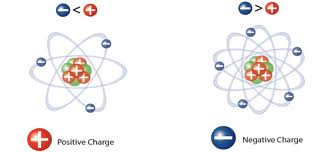
A substance that gains electrons becomes negatively charged, while a substance that loses electrons becomes positively charged.
When a charged object comes near to another object they will either attract or repel each other.
subject of this section
Objects can be positively charged, negatively charged or neutral (no charge).
A substance that gains electrons becomes negatively charged, while a substance that loses electrons becomes positively charged.
When a charged object comes near to another object they will either attract or repel each other.
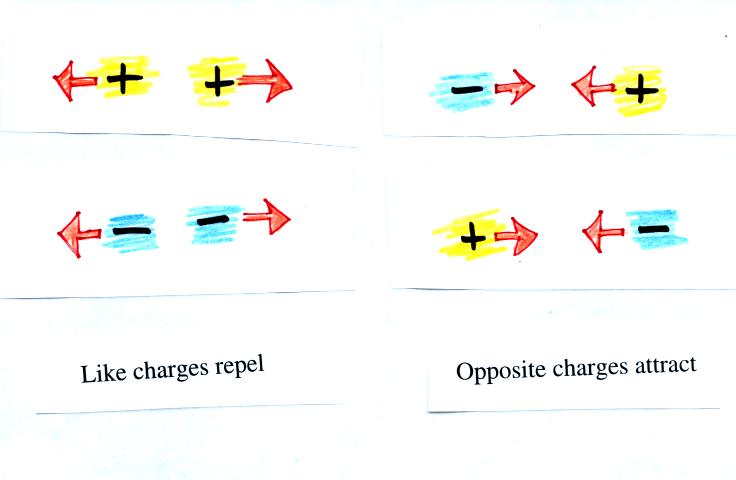
- If the charges are the same - they repel
- If the charges are opposite - they attract
- If one is charged and the other is
not - they attract
subject of this section
|
|
Charging materials
|
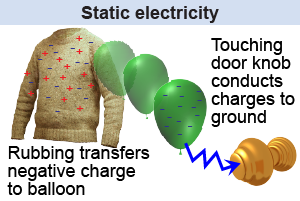
When you rub a balloon against a wool sweater the balloon will subsequently
attract your hair. Why? While rubbing, the sweater transfers some negative charges to the balloon. The balloon now has a net negative charge and the sweater has an equal net positive charge. A similar process takes place when you shuffle your feet along a rug. When you touch a metal conducting surface, such as a door knob, the built-up charge you have collected is attracted to its opposite through the metal conductor of the doorknob and, briefly, a tiny electric current flows. The current is what makes the zap! The negative charges in the single balloon are attracted to the positive charges in the wall. The two balloons hanging by strings both have negative charges. Negative charges always repel negative charges and positive always repels positive charges. So, the two balloons' negative charges "push" each other apart. |
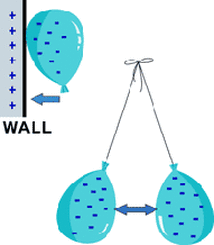
|
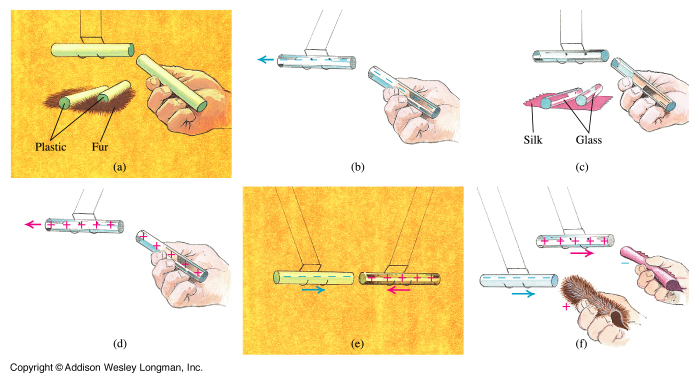
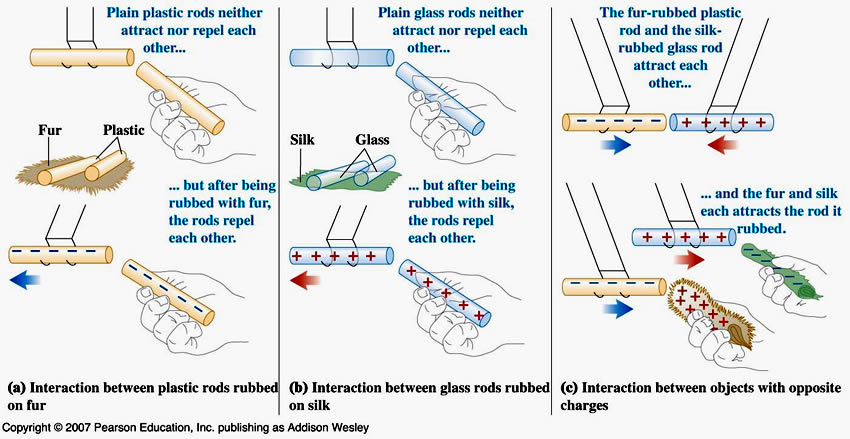
Plastic rubbed with fur becomes negatively charged, glass rubbed with silk becomes positively charged.
BBC- Shock and Awe: The Story of Electricity
Electricity – more often in the news for rising prices than how it sustains our way of life. Shock & Awe: The Story of Electricity, an Open University and BBC partnership, will tell the story of our quest to master this mysterious force. Presenter Professor Jim Al-Khalili will reveal how electricity not only powers our lives, but underpins every aspect of technological advancement. He will discuss how a diverse collection of people - some establishment traditionalists, some maverick outsiders, and some in-between - learned to create, store and move electricity, not only for heating and lighting, but also to convey information over vast distances. It allowed almost instantaneouscommunication across the seas and through the air, to connect people across the world in ways unimagined before. It supercharged the progress of science in every other field and is now the lifeblood of the modern world.
